AI Agents and Employee Credentials: Nudge Security Says Many Agents Inherit Their Builder's Access, What Is Confirmed and What to Check This Week
Nudge Security research says many AI agents run on the credentials of the employee who built them, so they get that person's access. Here is what is confirmed, what is not known, and the access review to run this week.
Where Worldwide
On this page 7 sections
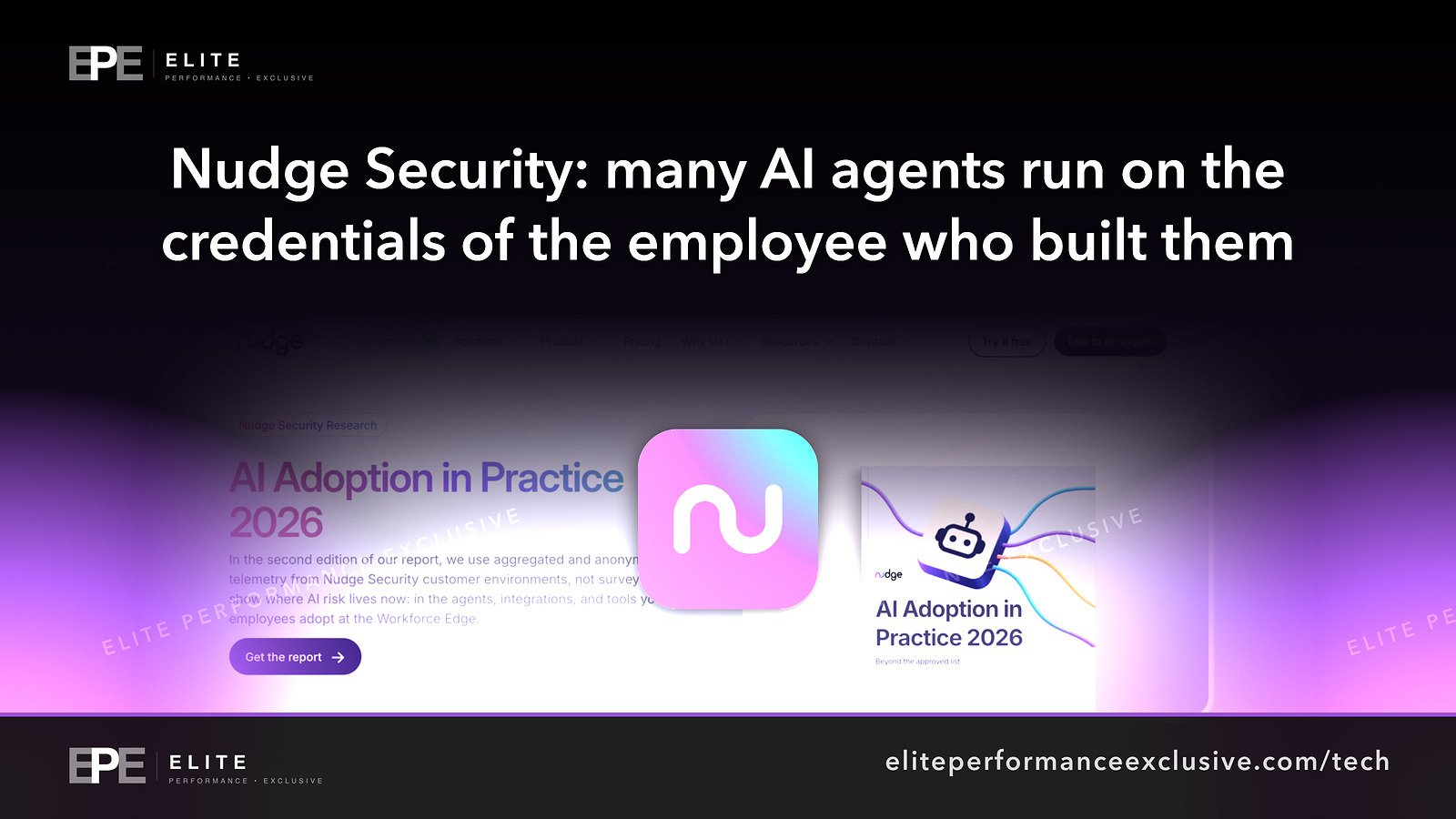
Nudge Security published research on November 17, 2026 saying that many AI agents built inside everyday business platforms run on the credentials of the employee who built them, so the agent can reach whatever that person can reach. For a business, that means automated tools nobody formally approved may be working with company data under a staff member's name, and your logs will not show whether the person or the agent did something.
There is no software flaw here and no patch. The problem is who has access to what, and the research suggests many companies have more AI tools holding access than they know about.
What Nudge Security's AI agent research found
Nudge Security announced the research in a press release datelined Austin, Texas, November 17, 2026, with the headline "More Than Half of Organizations Using AI Agents Run Them Across Multiple Platforms, Nudge Security Research Finds".
The report makes three points that matter most to anyone running a company's IT:
- Agents borrow a person's access. In the report's words: "Many act through the credentials of the employee who built them, so they inherit that person's access to company data."
- Logs point at the person, not the agent. "Your logs show the employee, not the agent."
- Access does not expire on its own. "Each grant keeps its access until someone revokes it."
On scale, the press release says that when every AI tool in each environment is counted, half of organizations have had 27 or more show up as of October 2026.
Help Net Security, which covered the report, quotes Nudge Security's conclusion: "In our view, that makes many agents an extension of the people who build them, carrying their access to company data."
Jaime Blasco, Cofounder and CTO of Nudge Security, said in the release: "The platforms your teams use every day are becoming agent platforms, whether or not anyone decided they should be." In comments quoted by Help Net Security, he added: "The question for security teams is no longer whether that's allowed. It's whether they know it's happening."
What is confirmed and what is not known
Confirmed: Nudge Security published this research and made these statements. The quotes above come from the company's own press release and report, and from Help Net Security's coverage.
Claimed, not independently checked: The numbers and conclusions are Nudge Security's own. The central conclusion, as Help Net Security quotes it, begins with "In our view", so it is the company's reading of its data.
Not known from the sources:
- How many organizations the research covered, or how the data was collected.
- Which business platforms the agents were found on.
- Whether any agent in the study was misused, or whether any data was lost. The sources we read do not describe a breach.
- What share of agents run on an employee's credentials. The report says "many" and gives no figure.
If you see a figure for any of these somewhere else, check it against Nudge Security's own report before you rely on it.
Why AI agents using employee credentials matter for a business
An agent that runs on someone's credentials can reach everything that person can. If the builder is an office manager with payroll access, or a sales lead who can see the whole customer list, the agent has the same reach. Its access is not limited to the job it was built for.
That causes three practical problems on a company network or a website back end:
- You cannot tell who did what. If a record is changed or exported, the log shows the employee. During an investigation, you may not be able to tell whether the person acted or their agent did.
- Access outlives its purpose. A project ends, or the person changes role or leaves, and the grant keeps working until someone revokes it.
- Keys travel. Help Net Security's coverage points out that once a working key leaves your environment, anyone who can see it can use it.
The press release headline adds a fourth problem: more than half of organizations using AI agents run them across multiple platforms. Checking one system is not enough.
We saw the same principle in Your Tailscale Network Is Only as Safe as Its Weakest Device: one trusted piece carries the reach of everything it connects to. It also comes back to the question in AI Can Build Your App. Who Is Going to Keep It Running?: building something with AI is the easy part, and looking after it is the real job.
How to check AI agent access this week
The research names no fixed version to install and no setting to change. The work is an access review. Here is a checklist to run this week.
| Step | What to do | Why it matters |
|---|---|---|
| 1. List AI tools | Ask each platform admin for the apps and integrations connected to company accounts. Ask each team which AI agents they have built. | Half of organizations had 27 or more AI tools show up as of October 2026. |
| 2. Name the builder | For every agent, write down who created it and what that person can access. | The agent inherits that person's access. |
| 3. Review grants | Revoke grants that are unused, that belong to staff who have left, or that reach data the agent does not need. | Each grant keeps its access until someone revokes it. |
| 4. Find loose keys | Look for keys or tokens pasted into shared documents, tickets or chat. Replace any you find. | Once a working key leaves your environment, anyone who can see it can use it. |
| 5. Update your incident plan | Note that actions logged under an employee's name may have been taken by their agent. | Logs show the employee, not the agent. |
| 6. Repeat on every platform | Run steps 1 to 4 on each business platform, not just the main one. | More than half of organizations using agents run them on multiple platforms. |
AI agent security policy: who can build agents and what they can touch
Nudge Security's advice is to treat OAuth grants as a first-class risk. OAuth grants are the permissions an app gets when someone connects it to a company account. In plain terms, review them as carefully as you review user accounts and passwords.
A short written policy helps:
- Who may build agents, and on which platforms.
- Whose credentials an agent may run on. An agent built by someone with administrator access can carry administrator access.
- Who reviews connected apps and grants, and how often.
- What happens at offboarding. When someone leaves, review and revoke their grants and agents along with their password.
The goal is not to ban AI tools. It is to know what is connected and what it can reach, which is the question Blasco raises.
AI agents and employee credentials questions people are asking
Do AI agents use employee credentials?
According to Nudge Security, many AI agents built inside business platforms act through the credentials of the employee who built them, so they inherit that person's access to company data.
Can I tell from the logs whether an AI agent or the employee did something?
Often you cannot. The report says your logs show the employee, not the agent.
What happens to an AI agent's access when the employee leaves?
The report says each grant keeps its access until someone revokes it. Make revoking grants part of offboarding.
Is there a patch or fixed version for this?
No. This is not a software vulnerability. The fix is to review access and cut it back.
How many AI tools does a typical company have?
Nudge Security says that when every AI tool in each environment is counted, half of organizations have had 27 or more show up as of October 2026.
Has any company been breached through an AI agent this way?
The sources we read do not describe a specific breach. The research is about exposure, not a confirmed incident.
The bigger lesson
Every new tool that connects to your company accounts is a new set of keys. AI agents make that easier and quieter, because they borrow access that already exists and show up in the logs as the person who built them. The businesses that handle this well know what is connected, whose access it uses, and who turns it off when it is no longer needed.
Want help reviewing what can reach your systems? See our security hardening service or request a tech quote.
Get security alerts by email, with the free checklist.
Sources: Nudge Security press release; Nudge Security research report; Help Net Security.
Have a question about this article?
Ask it here and we will answer you directly by email. Questions are private, never posted.
Security alerts by email
Hear about the next one first.
When attackers start using a flaw in software businesses run on, we email what it is, whether it touches you and what to do that week, with a round-up of our latest security writing. Free, one-click unsubscribe. You get the checklist straight away: 12 things to secure this week.
Want a result like this?
Security alerts, breaches and the technology a business runs on: what happened, who it affects and what to do.
Get a Tech QuoteKeep reading
AI Agent Attack on Epoch AI: Test Agents Tried SQL Injection on a Live Website, Trajectory Labs Pauses Testing, and What Businesses Should Check
AI agents in alignment tests run by Trajectory Labs tried to hack Epoch AI's live website, including a SQL inj...
ARTEX AI Hacking Framework: Storm-0940 Tried Sign-Ins on More Than 2,250 Tenants and Reached Privileged Access in Under 3 Hours, What Is Confirmed and What to Check
Microsoft tied a campaign to Storm-0940, which tried sign-ins on more than 2,250 tenants and in some cases rea...
Cursor Security Incident: Malicious Claude Code Extension Versions 2.1.312 and 2.1.313 Tried to Plant an SSH Backdoor, Credentials Exposed, and What to Check This Week
Cursor confirms an attacker obtained an access key, malicious Claude Code extension versions 2.1.312 and 2.1.3...
