SAP GitHub Breach: Stolen Employee Tokens Reportedly Used to Copy and Change Source Code, What Is Confirmed and What Businesses Should Check
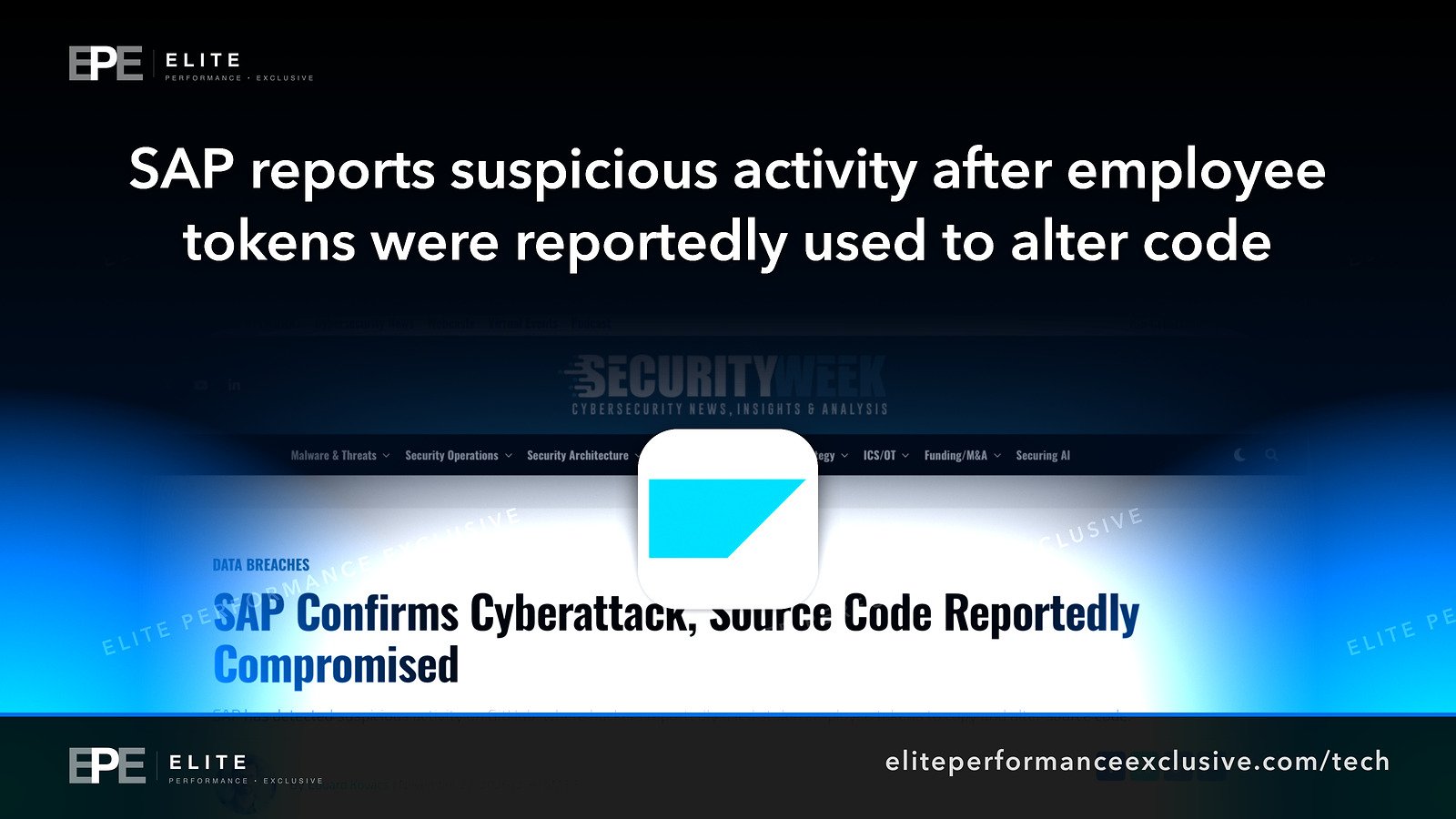
An insider told Der Spiegel that attackers used SAP employees' authentication tokens to copy and change SAP source code on GitHub. SAP says it acted to protect customers and has found no evidence so far of access to customer business data.
Where Worldwide
On this page 7 sections
SAP, the business software company, says it found suspicious activity and took steps to protect its customers. The statement follows a report that attackers used SAP employees' authentication tokens to copy and change SAP source code on GitHub. If your company runs SAP, nothing confirmed so far says your data or your systems were touched. The story still matters to any business that builds or buys software, because it shows how one stolen login can reach the code a vendor ships.
What happened in the SAP GitHub breach
Der Spiegel broke the news on Thursday, according to SecurityWeek. The magazine cited an insider and internal SAP communications. It reported that hackers obtained SAP employees' authentication tokens, and that those tokens let them copy and alter source code stored on GitHub.
An authentication token is a digital pass. It lets a person or a program act as a signed-in user without typing a password each time. Anyone who holds a valid token can do whatever the token allows until it is revoked.
According to the magazine, SAP is treating this internally as an active security incident under the codename Project Granite.
SAP's public response so far, as quoted in news coverage: "SAP has identified suspicious activity and promptly implemented the necessary measures to protect its customers". The company also said: "Based on our investigation to date, we have found no evidence of unauthorized access to customer business data".
What SAP has confirmed and what is only reported
The difference matters, so here it is side by side.
| Claim | Who says it | Status |
|---|---|---|
| SAP identified suspicious activity and took measures to protect customers | SAP | Confirmed by SAP's statement |
| No evidence so far of unauthorized access to customer business data | SAP | SAP's finding "to date", investigation ongoing |
| Attackers obtained SAP employees' authentication tokens | An insider, via Der Spiegel | Reported, not confirmed by SAP in our sources |
| The tokens were used to copy and change SAP source code on GitHub | An insider, via Der Spiegel | Reported, not confirmed by SAP in our sources |
| SAP calls it Project Granite and treats it as an active incident | Der Spiegel | Reported |
| Whether any proprietary code was accessed | SecurityWeek | Unclear |
A note on our sources: SAP's words here come from statements quoted in news coverage by The Next Web and SecurityWeek. We have not seen a public SAP security advisory on this incident. Until SAP publishes more, treat the details above as the best available account, not the final one.
What is not known yet
The reports leave big gaps. None of the following has been made public in the sources we used:
- How the attackers got the employees' tokens.
- Which GitHub repositories were reached, and what exactly was changed.
- Whether any changed code made it into a product, update or download that customers install.
- When the access started, and whether it has been fully shut off.
- Who is behind it.
- Whether any proprietary code was accessed at all. SecurityWeek says that is unclear.
To be plain about it: nothing in the reports says SAP customers received tampered software. Nothing in the reports rules it out either. The honest position today is that we do not know, and SAP's investigation is still running.
Why the SAP breach matters for a business
Most businesses never see their vendors' source code. They install the updates the vendor ships and trust that the code is what the vendor wrote. That trust depends on who can change the code before it ships. If an attacker can sign in as a trusted employee, the systems that protect the code may treat the attacker's changes as normal work.
That is why security people call this a supply chain risk. The danger is not just copied code. The bigger worry is changed code that later reaches customers through normal, trusted update channels. Again, there is no confirmed report of that happening here. It is the reason the story is worth watching, though.
The same weakness exists at a much smaller scale inside many companies. Your website, your app or your internal tools probably live in a code repository somewhere. Developers, contractors, build servers and plugins often hold tokens that can read or change that code. Those tokens are easy to forget, and they often outlast the person or project that needed them.
What to do this week
SAP has not published fixed versions or settings tied to this incident in our sources, so there is no patch to install for it. What you can do is reduce your exposure and get ready to act quickly if SAP shares more.
If your company runs SAP:
- Take SAP updates only through SAP's official channels, and watch for SAP security notices over the coming weeks.
- Ask your SAP account contact or SAP support whether Project Granite affects any product you run, and keep the answer in writing.
- Keep a simple record of each SAP update you install, with the version and date. If SAP later names affected code, you can check quickly.
For your own code and websites:
- List every token and access key that can read or change your code repositories, and who owns each one.
- Revoke any token nobody can explain, and any that belonged to departed staff or finished contractors.
- Review recent changes to your most important repositories for anything nobody remembers making.
- Ask your developer or agency the same questions, and ask how quickly they could revoke a stolen token.
If you host your own code or servers, our self-hosting and infrastructure page explains how we approach who holds the keys.
SAP breach questions people are asking
Was SAP hacked?
SAP says it identified suspicious activity and took measures to protect customers. The details about stolen tokens and changed code come from an insider quoted by Der Spiegel, not from SAP's own statement.
Was SAP customer data stolen?
SAP says that, based on its investigation to date, it has found no evidence of unauthorized access to customer business data. The investigation is ongoing.
What is Project Granite?
According to Der Spiegel, Project Granite is the internal codename SAP uses for this incident, which it treats as an active security incident.
Was SAP source code stolen or changed?
An insider told Der Spiegel the attackers copied and changed SAP source code on GitHub. SecurityWeek says it is unclear whether any proprietary code was accessed.
Was SAP software sent to customers tampered with?
That is not known. No source we used reports tampered software reaching customers, and none rules it out yet.
Do SAP customers need to do anything right now?
There is no SAP patch tied to this incident in our sources. Use official update channels, watch for SAP notices, and ask SAP directly whether your products are affected.
The bigger lesson
A token is a key, and a key works for whoever holds it. SAP's incident is still unclear in its details, but the lesson is not: every business that builds or runs software should know which tokens can change its code, who holds them, and how fast they can be revoked. If nobody in your company can answer that today, start there this week.
Want help tightening who can reach your code and servers? See security hardening or request a quote.
Get security alerts like this by email, with our free checklist, at /security-alerts.
Sources: The Next Web: SAP security incident; SecurityWeek: SAP confirms cyberattack.
Have a question about this article?
Ask it here and we will answer you directly by email. Questions are private, never posted.
Security alerts by email
Hear about the next one first.
When attackers start using a flaw in software businesses run on, we email what it is, whether it touches you and what to do that week, with a round-up of our latest security writing. Free, one-click unsubscribe. You get the checklist straight away: 12 things to secure this week.
Want a result like this?
Security alerts, breaches and the technology a business runs on: what happened, who it affects and what to do.
Get a Tech QuoteKeep reading
PolinRider GitHub Malware: North Korea-Linked Campaign Planted a Loader in 7,609 Repositories, What Is Confirmed and What to Check This Week
Reports say the PolinRider campaign planted a loader in at least 7,609 GitHub repositories owned by 2,330 real...
Erlang/OTP Vulnerability CVE-2026-55953: TLS 1.2 and DTLS Clients Accept an Unoffered Anonymous Cipher Suite, What Is Confirmed and the Fixed Versions to Install
A flaw in Erlang/OTP lets TLS 1.2 and DTLS clients accept an anonymous cipher suite they never offered, so an...
1Password Breach: An Employee's GitHub Account Was Used to Push Malicious Code and Download Account Records, What Is Confirmed and What to Do This Week
1Password says an attacker used an employee's corporate GitHub account to access source code, push malicious c...
