Supermarket Cyberattack: France Says an Offensive Cyber Unit Sabotaged Refrigeration Controls at More Than 700 Retail Sites, What Is Confirmed and What to Check on Your Own Equipment
France says attackers took over the refrigeration controls at more than 700 retail sites, sparking fires and spoiling food worth tens of millions of euros. Here is what is confirmed, what is not known, and what to check this week.
Where France · Europe, Western Europe
On this page 8 sections
Attackers took over the refrigeration system controls at more than 700 retail sites in France during the night from 11 to 12 October. The French government says the result was fires and spoiled food estimated to be worth tens of millions of euros. If your business depends on coolers, freezers or any equipment with a controller on a network, this is a real case of a cyberattack that damaged stock and property instead of stealing data.
What happened in the supermarket cyberattack
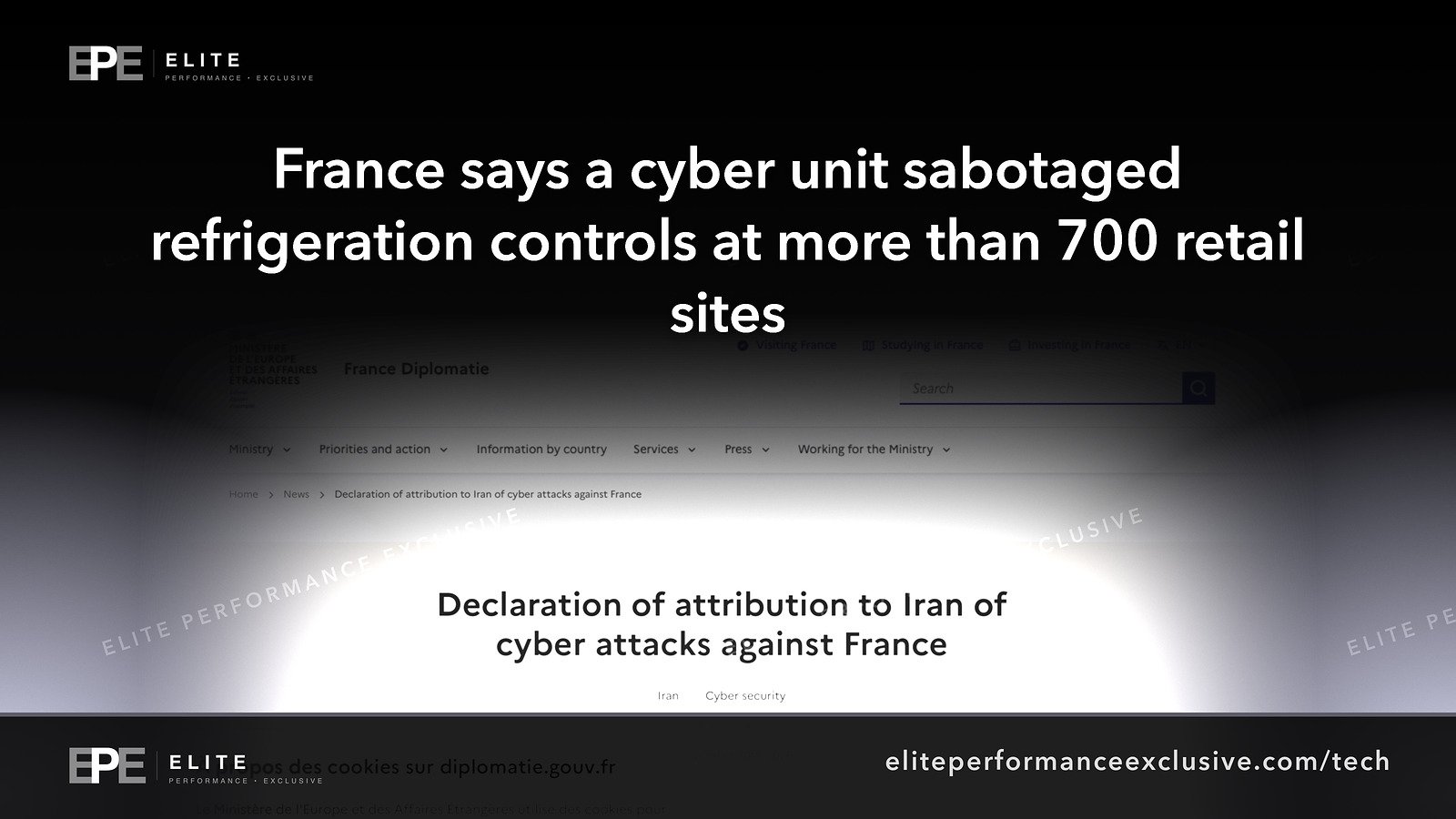
The French foreign ministry's statement says attackers went after "the supermarket refrigeration system controls of more than 700 retail sites in France" in the night from 11 to 12 October. The ministry says this sparked fires and spoiled foodstuffs estimated to be worth tens of millions of euros. It calls the campaign the first offensive cyber campaign carried out purely for sabotage on French soil.
The ministry also names the attacker: "they were carried out by SHAHID KAVEH, an offensive cyber unit". The statement attributes the attacks to Iran. France says it will propose further sanctions against Iranian entities and individuals to its European partners.
BleepingComputer adds two details that we could not confirm from the government statement:
- The hackers compromised Danfoss refrigeration controllers and remotely changed defrost settings to high temperatures.
- The attacks sparked at least 15 fires.
Claimed vs confirmed
| Point | Status | Source |
|---|---|---|
| Refrigeration controls at more than 700 retail sites in France were attacked | Stated by the French government | French foreign ministry |
| Timing: the night from 11 to 12 October | Stated by the French government | French foreign ministry |
| Fires, and spoiled food worth tens of millions of euros | Government estimate | French foreign ministry |
| Carried out by Shahid Kaveh | Government attribution | French foreign ministry |
| Danfoss controllers, with defrost settings changed to high temperatures | Reported, not in the government statement | BleepingComputer |
| At least 15 fires | Reported | BleepingComputer |
| How the attackers got access | Not known | None of our sources say |
| Which supermarket chains were hit | Not known | None of our sources say |
| Whether a software flaw was used | Not known | None of our sources say |
An attribution is a government's assessment. The sources we checked do not include the technical evidence behind it.
How did hackers get into the refrigeration controllers?
For a business owner this is the question that matters most, and the honest answer is that our sources do not say. They don't say whether the controllers could be reached from the internet, whether the passwords were weak or left at the default, whether a remote access tool or a service company's account was used, or whether a software flaw was involved. They give no CVE number, no Danfoss advisory and no fixed firmware version. We won't guess.
What has been reported is how the harm was done. According to BleepingComputer, the attackers changed defrost settings to high temperatures. The attackers didn't need to break the equipment. They only needed to get in and change a setting, and the equipment did what it was told.
Who is Shahid Kaveh?
The French government names Shahid Kaveh as an offensive cyber unit and attributes the campaign to Iran. BleepingComputer reports that the unit also operates under hacktivist personas, including CyberAveng3rs, Soldiers of Solomon, Mr. Soul and Cyber Isnaad Front.
Why this matters for a business network
Refrigeration and building controllers run in many places besides supermarkets: grocers, restaurants, convenience stores, food distributors, warehouses with cold rooms, pharmacies and clinics with medication fridges, and any building with a heating and cooling management system.
These controllers are often installed and looked after by a refrigeration or HVAC contractor, not by the people who run IT. That leaves common gaps:
- Nobody on the IT side knows the controller is on the network.
- The controller sits on the same network as office computers, point-of-sale terminals or guest Wi-Fi.
- The contractor has a remote access link that nobody reviews.
- Nobody owns updates. We wrote about that gap in Who Is Patching the Software That Runs Your Business?.
What to do this week
We have no fixed version to give you, because our sources name none. These steps cut the risk whatever brand of controller you run.
| Action | How to check | Who to ask |
|---|---|---|
| List every networked controller | Walk each site and note refrigeration, freezer, HVAC and building management controllers with a network cable or Wi-Fi | Facilities manager, refrigeration contractor |
| Find out if any can be reached from the internet | Ask how remote access works, and check your firewall for port forwards that point to controllers | IT provider, contractor |
| Change default passwords | Make sure every controller and its web or app login has a unique password, different at each site | Contractor |
| Separate the network | Keep controllers off the network used by office PCs, point-of-sale and guest Wi-Fi | IT provider |
| Review vendor remote access | List who has access, remove accounts nobody uses, and require a VPN with multi-factor login | IT provider, contractor |
| Check defrost and temperature settings | Compare the current settings with what the installer set, and ask whether the controller logs changes | Contractor |
| Add an independent temperature alarm | A separate sensor that alerts staff by text means you find out even if the controller has been changed | Facilities manager |
| Plan the response | Decide who gets called, how to switch to manual control and how to move stock | Owner, managers |
If you run Danfoss controllers, ask your installer or Danfoss directly for guidance. Our sources include no Danfoss advisory. For help with remote access, see Your Tailscale Network Is Only as Safe as Its Weakest Device. For the response plan, see When Your Systems Go Down, Who Do You Call?
Supermarket cyberattack questions people are asking
What happened to supermarket refrigeration in France?
The French government says attackers went after the refrigeration system controls of more than 700 retail sites in the night from 11 to 12 October, sparking fires and spoiling food estimated to be worth tens of millions of euros.
Who was behind the France supermarket cyberattack?
France attributes the attacks to Iran and names Shahid Kaveh, which it calls an offensive cyber unit. BleepingComputer reports that the group also uses the names CyberAveng3rs, Soldiers of Solomon, Mr. Soul and Cyber Isnaad Front.
Were Danfoss controllers hacked?
BleepingComputer reports that the attackers compromised Danfoss refrigeration controllers. The government statement we checked does not name a vendor, and our sources do not say whether any flaw in the product was used.
How do I know if my refrigeration controller is exposed to the internet?
Ask your contractor how they connect remotely, and have your IT provider check the firewall for rules that point to the controller. If either one can reach it from outside without a VPN, treat it as exposed. Our post Your Website Is Live. Can Anyone Find It, and Is It Locked? explains the same idea for websites.
The bigger lesson
Anything on your network that controls something physical belongs in your security plan, whether that is a freezer, a cooler or a heating and cooling system. In this case the attackers didn't need to steal anything. They changed a normal setting on more than 700 sites in one night. Know what you have connected, who can reach it, and how you would find out if someone changed it.
If you want help locking down the equipment and remote access on your network, see security hardening or request a quote.
Get security alerts by email, with the free checklist, at /security-alerts.
Sources: French Ministry for Europe and Foreign Affairs, attribution statement; BleepingComputer.
Have a question about this article?
Ask it here and we will answer you directly by email. Questions are private, never posted.
Security alerts by email
Hear about the next one first.
When attackers start using a flaw in software businesses run on, we email what it is, whether it touches you and what to do that week, with a round-up of our latest security writing. Free, one-click unsubscribe. You get the checklist straight away: 12 things to secure this week.
Want a result like this?
Security alerts, breaches and the technology a business runs on: what happened, who it affects and what to do.
Get a Tech QuoteKeep reading
BYOD Ransomware: Vanderbilt and UNM Attacks Played Spoken Ransom Warnings, What Is Confirmed and What Businesses Should Do This Week
The BYOD ransomware group claims attacks on Vanderbilt University and UNM's Health Sciences Center, where infe...
Cleverbridge Data Breach: Card Numbers and Some CVV Codes Stolen, What Is Confirmed and What to Do This Week
Cleverbridge, which runs e-commerce for software and SaaS companies, says payment card details from purchases...
CISA Exploited Vulnerabilities: New Flaws Added to Its Catalog, a Vates Admin Bypass Under Attack and the Mitel MiCollab 10.3.0.18 Patch
CISA added actively exploited vulnerabilities to its catalog. Vates says a login bypass giving Admin access is...
