Telegram Widgets Vulnerability: Exploit Demos, a WebRAT Malware Warning, a Disputed Fix and What Businesses Should Tell Staff This Week
Days after Telegram launched widgets, researchers posted a demo video and Kaspersky advised people not to launch them. Here is what is confirmed, what is only claimed, and what to do this week.
Where Worldwide
On this page 8 sections
Telegram's new widgets feature started drawing security warnings within days of launch. Researchers posted a demo video, Kaspersky advised people not to launch widgets, and reports linked the problem to WebRAT, a trojan that can take control of a computer. If your staff use Telegram on work laptops or phones, this matters to you: the malware named in the coverage can also steal Telegram account data and cryptocurrency wallet data.
Telegram's side says the issue has been fixed. Below we separate what has been confirmed from what has only been claimed, and list what a business can do this week.
What happened with Telegram widgets
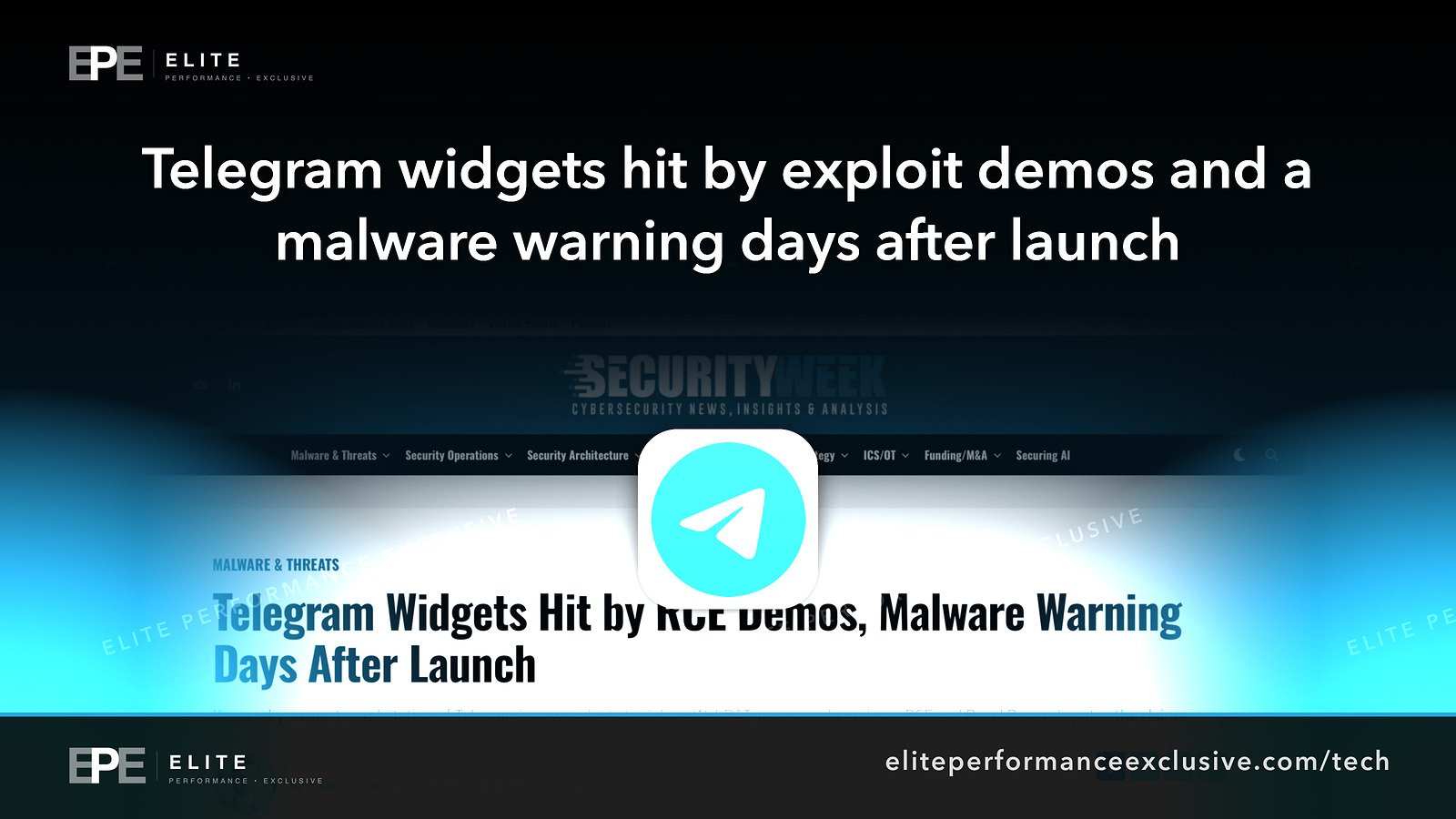
Widgets are a new Telegram feature: small HTML apps, sometimes called bubbles, that run inside the chat app. Here is the timeline as SecurityWeek reported it:
- November 10: Telegram CEO Pavel Durov promoted the widgets feature on X.
- A day later: researchers at V12 posted a video on X. SecurityWeek's headline calls these remote code execution (RCE) demos. Our sources do not describe exactly what the video showed.
- November 13: SecurityWeek cites a November 13 post on a Russian-language Telegram channel. On the same day, a post on X quoted by SecurityWeek disputed how serious the problem was: "No one could be hacked just by receiving a message,"
- The fix: SecurityWeek quotes a statement that the issue "was fixed yesterday, and the fix was deployed to all users earlier today."
Kaspersky's advice, as SecurityWeek reported it, was blunt: "do not launch widgets in Telegram until a fix is released."
Separately, the Russian tech outlet Kod.ru reported that malicious activity is being recorded and is presumed to be linked to this vulnerability. The key word is "presumed": the report does not establish the link as fact.
What is confirmed and what is claimed
| Statement | Status |
|---|---|
| Telegram launched widgets and Durov promoted them on X on November 10 | Reported by SecurityWeek |
| V12 researchers posted a demo video on X a day later | Reported by SecurityWeek |
| Kaspersky advised people not to launch widgets until a fix is released | Reported by SecurityWeek |
| Malicious activity linked to the flaw | Claimed: Kod.ru says it is presumed, not proven |
| No one could be hacked just by receiving a message | Claimed in a post on X; no independent confirmation in our sources |
| The fix has been deployed to all users | Claimed in a statement quoted by SecurityWeek; no independent confirmation in our sources |
What is not known: our sources do not name a CVE number, a fixed app version, or the platforms affected (desktop, iPhone, Android). They also do not say how many people were hit, or whether Kaspersky's advice came before or after the fix was announced. We will not guess at any of these.
What is WebRAT malware?
SecurityWeek describes it plainly: "WebRAT is a Rust-based trojan that gives attackers control of the infected system." It adds: "It can also steal cryptocurrency wallet and Telegram account data."
RAT stands for remote access trojan. Once a RAT is running, the attacker can use the machine as if they were sitting at it. On a work laptop, that means everything the user can reach: email, shared drives, saved passwords, and the company's chat accounts.
Can you get hacked just by receiving a Telegram message?
The post on X says no. If that is right, someone has to do something before the attack works, such as opening or launching a widget. That is better news than a flaw that needs no action at all from the user. But a flaw that needs one tap is still a real risk, because getting people to tap is exactly what attackers are good at.
What to do this week
Our sources give no fixed version number, so you cannot check for a specific safe build. What you can do is cut down how often staff run untrusted widgets, and check any device that may already have run one.
| Step | What to do | Why |
|---|---|---|
| 1 | Tell staff not to launch Telegram widgets for now, especially ones sent by people they do not know | This is Kaspersky's advice, and the fix has not been independently confirmed |
| 2 | List who uses Telegram for work, and on which devices | You cannot protect devices you do not know about |
| 3 | Keep Telegram updated through the usual app store or updater, and restart it | Telegram says the fix has been deployed; this makes sure devices are not left behind |
| 4 | Ask staff whether they have opened a widget since November 10 | It finds devices worth a closer look |
| 5 | If a widget from an unknown source was launched on a work device, have the device checked before trusting it again | WebRAT, as described, gives attackers control of the system |
| 6 | After any suspect device is checked, change passwords for that user from a clean device | The trojan can steal Telegram account data |
| 7 | Keep company crypto wallets off devices used for everyday chat | The malware can steal wallet data |
Why this matters for a company network
Many businesses treat messaging apps as personal tools, even when they run on company laptops. A trojan on one of those laptops sits inside your network with the user's access. A stolen Telegram account is a problem of its own: whoever holds it could message your customers, suppliers or staff as a person they already trust.
There is also a lesson about launch timing. According to SecurityWeek's reporting, researchers had a demo out within a day of the feature being promoted. Brand-new features have not been tested by the outside world yet. For a business, the safe default is to let a new feature settle before you rely on it, and to have a way to tell staff not to use a new feature yet, quickly.
If you run your own apps or websites, the same thinking applies to any feature that lets third-party code run inside your product. It needs a security review before launch, not after the first demo video shows up. That is the work we describe on our security hardening page.
Telegram widgets questions people are asking
Is the Telegram widget vulnerability fixed?
A statement quoted by SecurityWeek says the issue was fixed and deployed to all users. Our sources do not independently confirm this, and they give no version number.
Is Telegram safe to use right now?
Ordinary messaging was not reported as affected. The risk described centres on widgets. Until the fix is independently confirmed, the safe choice is not to launch widgets.
Can I be hacked just by getting a Telegram message?
A post on X quoted by SecurityWeek says no one could be hacked just by receiving a message. That claim has not been independently verified in our sources.
What is WebRAT?
It is a Rust-based trojan that gives attackers control of an infected system. It can also steal cryptocurrency wallet and Telegram account data.
Was the Telegram widget flaw used in real attacks?
Kod.ru reports malicious activity that is presumed to be linked to the vulnerability. Our sources do not confirm the link.
Should my business block Telegram?
That depends on how you use it. A reasonable step this week is to tell staff not to launch widgets and to check any device where someone has.
Which devices are affected?
Our sources do not say which platforms or app versions were affected.
The bigger lesson
Every new feature that runs code inside an app is a new way in, and attackers move as fast as the launch announcement. Businesses that keep a current list of the apps on their devices, and can tell staff to stop using a feature the same day, deal with weeks like this calmly.
To get your apps and devices reviewed and hardened, see security hardening or request a tech quote.
Get security alerts like this by email, plus our free checklist, at security alerts.
Sources: SecurityWeek: Telegram widgets hit by RCE demos, malware warning days after launch; Kod.ru (https://kod.ru/telegram-widgets-trojan-webrat).
Have a question about this article?
Ask it here and we will answer you directly by email. Questions are private, never posted.
Security alerts by email
Hear about the next one first.
When attackers start using a flaw in software businesses run on, we email what it is, whether it touches you and what to do that week, with a round-up of our latest security writing. Free, one-click unsubscribe. You get the checklist straight away: 12 things to secure this week.
Want a result like this?
Security alerts, breaches and the technology a business runs on: what happened, who it affects and what to do.
Get a Tech QuoteKeep reading
Apple Secure Exclaves: Camera and Microphone Data Walled Off From the OS, Apps and Apple, What Is Confirmed and What Businesses Should Do
Apple says its new Secure Exclaves process camera and microphone data where the operating system, apps and App...
Siri Conversation History: The Siri App Kept Conversations "Forever" by Default on a Researcher's Device, What Is Confirmed and How to Shorten It
A forensic researcher found the Siri app keeps a database of conversations, with retention set to "Forever" by...
Binance Hack: North Korea's TraderTraitor Blamed for the $6.43 Billion Theft, Stolen Funds Traced Through Home-Made Meme Coins, and What Businesses Should Check
Attackers drained Binance wallets across 11 blockchains on October 29, 2026. Researchers have now traced about...
