AI Cyberattacks and Weak Security: The UK's NCSC Says AI Revealed Years of Technical Debt, What Is Confirmed and What Businesses Should Fix This Week
The UK's NCSC says AI did not create cyber security weaknesses, it revealed them. Here is what the Annual Review 2026 confirms, what it does not say, and the basics to check on your network this week.
Where Worldwide
On this page 7 sections
The UK's NCSC says in its Annual Review 2026 that AI is not inventing new security holes. It is finding the old ones that organisations never fixed. If your business still runs unpatched servers, forgotten logins or a website nobody has updated in years, attackers can now find those gaps more cheaply and more quickly.
What the NCSC said about AI cyber attacks
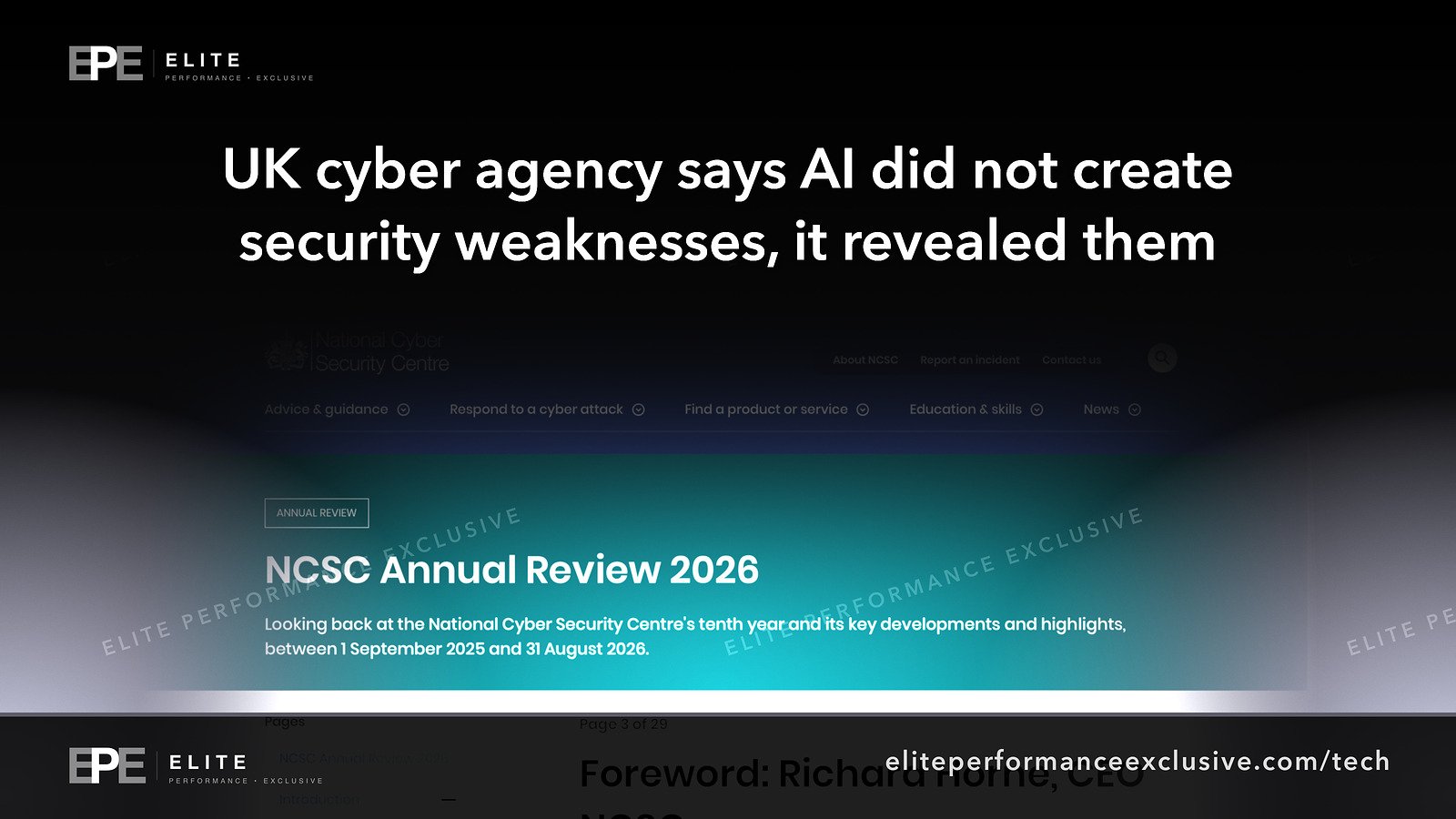
The CEO's foreword to the review sums it up in one line: "AI did not create these cyber security weaknesses; it revealed them."
The foreword goes on: "It exposed years of technical debt and the failure to implement even basic cyber protections".
On what AI does for attackers, the foreword says: "AI makes cyber attacks easier, faster and cheaper to execute, and at greater scale."
The review's section on building strong foundations is blunter still: "AI-assisted cyber attacks will ruthlessly expose organisations that don't have strong cyber security foundations in place."
The foreword also carries some good news: "The tools, standards and frameworks that can protect the UK from conventional and AI-powered cyber attacks already exist."
What is confirmed, and what is not known
Confirmed: the lines quoted above appear on the NCSC's Annual Review 2026 pages. The review covers the period between 1 September 2025 and 31 August 2026. The review's section on the threat gives a figure of 337 incidents.
Not known from what we confirmed:
- What exactly the 337 incidents figure counts, and how the NCSC classified those incidents.
- Which AI tools or attack techniques were involved.
- Which basic protections were missing in the cases the NCSC describes.
- How much faster or cheaper AI has made attacks in practice. The NCSC's lines say easier, faster and cheaper, but the passages we confirmed give no figures for that.
We are not filling those gaps with guesses. Some coverage of the review goes further than this. Treat anything beyond the quoted lines as reporting, not as the NCSC's own words.
How AI makes old security weaknesses more dangerous
This part is our reading of the NCSC's words, not a quote.
Finding weak systems used to take an attacker time and effort. An old server, a forgotten admin page or an unpatched remote access box could sit unnoticed for years because nobody spent the effort to look. If AI makes attacks easier, faster, cheaper and possible at greater scale, as the NCSC says, then targets that were once not worth the effort are now worth it.
So a business does not have to be famous or interesting to be hit. It only has to be reachable and neglected. The NCSC's point is that the weakness was always there. AI just shortens the time before someone finds it.
Why this matters for a company network or website
In a business, technical debt is rarely dramatic. It looks like this:
- A server in a closet that runs fine, so nobody has touched it in years.
- A website plugin or theme that stopped getting updates.
- A login that still belongs to someone who left the company.
- A firewall or VPN box running firmware from several releases ago.
- A test site that went live once and was never taken down.
None of these feels urgent on a normal day, and that is exactly why they pile up. We have written about the ownership side of this before: who is patching the software that runs your business, and why updated is not the same as patched. If your website runs on a popular platform, why WordPress sites get hacked covers the website side. If your team is shipping AI-built tools, who keeps an AI-built app running is the same problem from a different angle.
What to do this week
The NCSC passages we confirmed do not give a step-by-step list. The checklist below is our own general advice on the basics. It names no specific product versions, because the review lines we checked do not name any.
| Task | How to check | Done when |
|---|---|---|
| List everything reachable from the internet | Website, domains, email, VPN, remote access tools, cloud admin panels, any exposed server | You have one written list, with nothing "probably" on it |
| Check each item for overdue updates | Compare the installed version against the vendor's current release notes | Every item is either current or has a date to update it |
| Remove what nobody uses | Old test sites, retired servers, unused accounts and services | Each one is shut down or has a named reason to stay |
| Review who can log in | Former staff, shared accounts, admin rights nobody needs | Every account belongs to a current person with a reason |
| Name an owner for every system | Who updates it, who gets the alert when it breaks | No system on the list is left with nobody responsible for it |
| Test a restore | Restore one real file or site from backup | You know the backup works, not just that it runs |
Start with any system that has no owner and no update history. It is the kind of gap the NCSC's lines describe.
AI cyberattacks questions people are asking
Did AI create new security weaknesses?
Not according to the NCSC. Its CEO's foreword says: "AI did not create these cyber security weaknesses; it revealed them."
Why does AI make cyber attacks more dangerous?
The NCSC says AI makes attacks easier, faster and cheaper to carry out, and at greater scale. In practice, that means more attackers can reach more neglected systems in less time.
Do businesses need new AI security tools to defend against AI-powered attacks?
The NCSC's CEO says the tools, standards and frameworks to protect against both conventional and AI-powered attacks already exist. The gap is putting them in place, not inventing them.
What does technical debt mean in cyber security?
In plain terms, it is the backlog of fixes that got put off: old software, unpatched systems, accounts nobody cleaned up. The NCSC says AI exposed years of it.
What period does the NCSC Annual Review 2026 cover?
Between 1 September 2025 and 31 August 2026.
How many incidents does the NCSC Annual Review 2026 mention?
The threat section gives a figure of 337 incidents. We have not confirmed exactly what that count covers, so we are not describing it further.
Does a UK report matter to a US business?
In our view, yes. Unpatched servers, forgotten logins and outdated websites work the same way in Ohio as they do in the UK. The NCSC's warning is about weak foundations, and those are not limited to one country.
The bigger lesson
The NCSC is not saying AI attacks are unstoppable. It is saying they punish whatever was left undone. Patching, cleaning up old systems and knowing who owns what were always the job. Now the cost of skipping them shows up sooner. A business that has its basics in order loses less to AI-assisted attacks than one that is waiting for a new product to save it.
If you want help finding and closing these gaps, see security hardening or get a quote.
Get security alerts by email, plus the free checklist, at security alerts.
Sources: NCSC Annual Review 2026, foreword from the NCSC CEO; NCSC Annual Review 2026, building strong foundations; NCSC Annual Review 2026, understanding the threat.
Have a question about this article?
Ask it here and we will answer you directly by email. Questions are private, never posted.
Security alerts by email
Hear about the next one first.
When attackers start using a flaw in software businesses run on, we email what it is, whether it touches you and what to do that week, with a round-up of our latest security writing. Free, one-click unsubscribe. You get the checklist straight away: 12 things to secure this week.
Want a result like this?
Security alerts, breaches and the technology a business runs on: what happened, who it affects and what to do.
Get a Tech QuoteKeep reading
AI Agent Cyberattacks: Switzerland Confirms Break-Ins Using AI Agents, Three Critical Infrastructure Operators Hit, and What to Patch This Week
Switzerland's NCSC says attackers used AI agents that search for weaknesses and pick attack tools on their own...
BYOD Ransomware: Vanderbilt and UNM Attacks Played Spoken Ransom Warnings, What Is Confirmed and What Businesses Should Do This Week
The BYOD ransomware group claims attacks on Vanderbilt University and UNM's Health Sciences Center, where infe...
Cleverbridge Data Breach: Card Numbers and Some CVV Codes Stolen, What Is Confirmed and What to Do This Week
Cleverbridge, which runs e-commerce for software and SaaS companies, says payment card details from purchases...
